
Understanding Pest Management
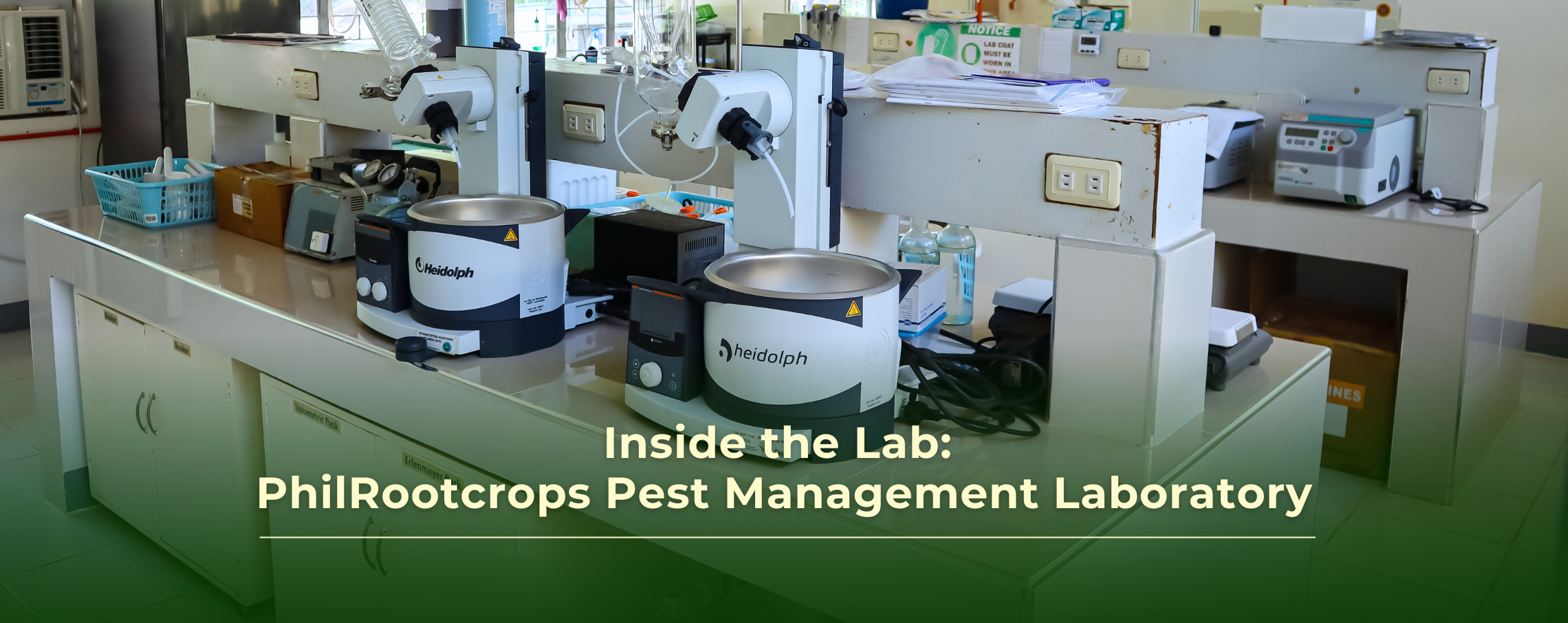
The Pest Management Laboratory of PhilRootcrops serves as a central hub for analysing and diagnosing pest and disease threats in rootcrops. Its main functions include field surveillance, germplasm monitoring, and providing rapid diagnostic services through its pioneering preventive methods and proactive strategies. By bridging research with timely science-based solutions, the lab ensures rootcrop protection and agricultural security.
Breakthroughs in Innovation
Among its notable achievements is the development of the Sweet Potato Weevil Pheromone, pioneered by former center director Erlinda Vasquez. This eco-friendly method uses synthetic female pheromones to lure and trap male weevils, disrupting their reproductive cycle. Designed for easy use, these compact vials containing the pheromone are hung strategically across fields, providing farmers with an environmentally safe and non-toxic defense that allows sweet potatoes to thrive during production periods.
These breakthroughs complement studies on rootcrop diseases, such as those affecting cassava, thereby strengthening efforts to secure farmer livelihoods and ensure rootcrop supply.
A Hub for Service and Collaboration
Equipped with state-of-the-art technologies, the laboratory provides services to affiliated departments and students conducting their theses. Access is granted upon submission of a formal request, ensuring proper coordination while fostering spaces of scientific growth, innovation, and capacity-building within the institution.
Current Undertakings: Tackling Sweet Potato Viruses
At present, the lab focuses on the detection and indexing of sweet potato viruses in Eastern Visayas. One particular virus has been identified, the Sweet Potato Leaf Curl Virus, which is in the stages of observation and further studies. Through molecular amplification and virus profiling, the lab generates data to improve diagnostic accuracy, incorporate early detection markers, and strengthen pest management systems, enhancing farmer resilience and agricultural sustainability.